A bootstrapped company studio

Turn what you know about an industry into a software company.

GetSterlingAI co-founds vertical AI companies with domain experts. You bring the market knowledge and customer access. We bring product strategy, design, engineering, and applied AI. We share the early costs, the work, and the ownership—then grow from customer revenue.

Companies in development

Building for operators conventional software underserves.

These are early products, not mature case studies. ResidentInbox has four pilot users; MolarPM is in development.

Resident communication
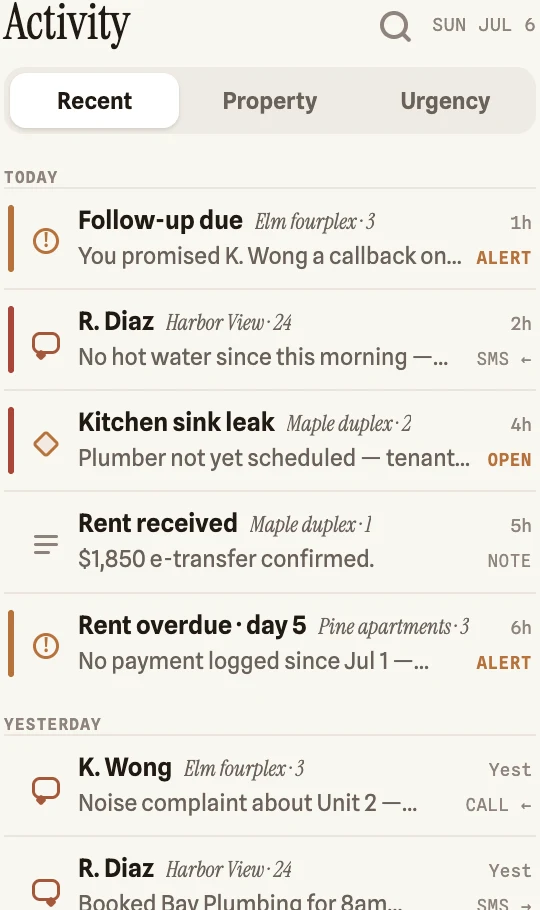
Urgent issues do not get buried.

One activity feed brings together follow-ups, maintenance issues, and rent alerts.

Cropped ResidentInbox activity feed highlighting follow-up reminders, maintenance issues, and rent alerts
014 pilot users

ResidentInbox

For independent landlords

A tenant communication and maintenance system that organizes requests, escalates important issues, tracks follow-up, and preserves a usable record of every interaction.

  • Run move-in and move-out inspections from your phone
  • Keep emails, texts, and in-person conversations in one complete record
  • Coordinate maintenance between tenants and vendors without the back-and-forth
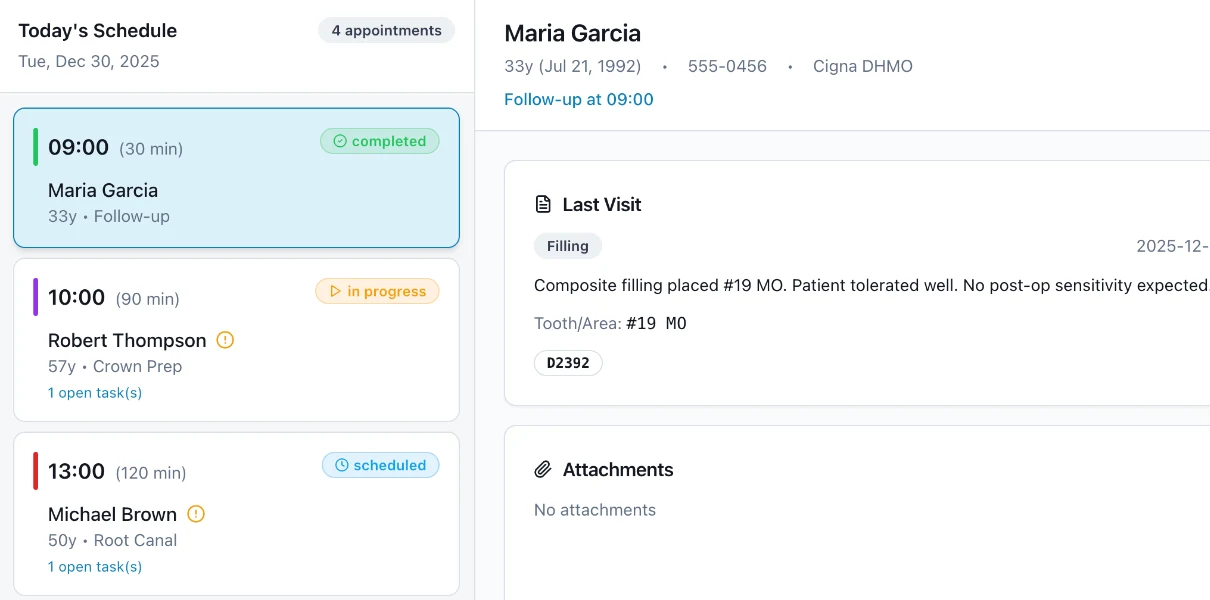
Front desk workflow
Cropped MolarPM dashboard showing the schedule and patient context together
02In development

MolarPM

For independent dental practices

Software for repetitive front-office work that helps staff move from the day's schedule to patient context, tasks, and follow-up without losing the thread.

  • Coordinates repetitive patient follow-up
  • Surfaces insurance and scheduling exceptions for review
  • Keeps important decisions visible and auditable
No studio capital

Both co-founders share a defined, modest early budget rather than waiting for an investor.

Ownership is shared

This is a founder relationship—not an agency project, advisory role, or idea-submission program.

Revenue before fundraising

We aim to reach profitability first. Outside capital is optional and comes later, if at all.

Why this model exists

The economics of software creation changed. Most company-building models did not.

AI has made the first credible version of specialized software dramatically cheaper to build. But the knowledge required to build the right product still lives inside the industry.

01

Creation became cheaper

Small teams can now design, build, and operate focused software without assembling a conventional venture-funded organization first.

02

Industry truth stayed scarce

The valuable insight is usually not an abstract idea. It is knowing which workflow is costly, who owns it, how buyers decide, and why existing tools fail.

03

Constraints improve the company

A small shared budget forces a narrow product, early customer contact, disciplined scope, and evidence of willingness to pay.

How a company gets built

Start with a costly workflow. Earn the right to build everything else.

We do not begin with a generic AI capability or a pitch deck. We begin with a specific operational problem and test whether a focused product can produce a result customers will pay for.

01

Find founder-market fit

We look for domain experts with non-obvious knowledge, access to prospective customers, and the appetite to operate a company—not merely advise one.

02

Validate the pain

Together we map the current workflow, quantify its cost, study failed alternatives, and test whether customers will commit time, data, or money to a better approach.

03

Set the founder agreement

Before substantial building, we agree on responsibilities, ownership, vesting, decision rights, shared expenses, and what each founder will continue to own after launch.

04

Build the narrow wedge

We create the smallest product that can complete a meaningful workflow—not a broad platform, demo theater, or a pile of AI features.

05

Grow from customers

We improve the product through usage and revenue, expand only after the initial wedge works, and design the business to reach profitability before considering a raise.

A real co-founder relationship

Different expertise. Shared risk, decisions, and upside.

The domain expert is not a research participant. GetSterlingAI is not a temporary development vendor. Both sides take long-term responsibility for building the company.

The domain co-founder brings

The market advantage that cannot be generated by a model or purchased from a generic research report.

  • Firsthand knowledge of the industry and its workflows
  • Access to prospective customers and design partners
  • Judgment about what matters, what is regulated, and what will fail
  • Business, customer, and go-to-market leadership
  • Ongoing founder-level commitment after launch

GetSterlingAI brings

The product and technical capability required to turn the market advantage into working software.

  • Problem framing, product strategy, and validation design
  • Product design and end-to-end workflow architecture
  • Software engineering, applied AI, and infrastructure
  • Technical roadmap, product iteration, and operational reliability
  • Ongoing product and technical stewardship after launch
Shared by both founders

A defined early budget, meaningful ownership subject to vesting, consequential decisions, customer accountability, and the responsibility to keep building after the first version ships.

Founder, GetSterlingAI

Albert Chow

Albert founded MangoText, bootstrapped it to profitability within 12 months, and sold it to Modo Labs. He later led product and AI work at Intuit, Capital Group, and Pipe. He holds a PhD in Electrical Engineering and Computer Science from MIT.

LinkedIn

Who should explore this

We are looking for operators, not idea submitters.

A strong co-founder candidate knows a market from the inside, can reach its customers, and wants responsibility for building the business—not just credit for recognizing the problem.

Likely a strong fit

  • You have spent meaningful time inside a specific industry
  • You can explain one painful workflow in operational detail
  • You know prospective customers who will challenge the thesis
  • You want to help sell, operate, and shape the company
  • You are willing to share a modest initial budget and work toward profitability

Probably not a fit

  • You want someone to build an app while you remain passive
  • Your advantage is the idea alone, without customer access or domain depth
  • You are primarily looking for investment capital
  • You want to build broadly before testing willingness to pay
  • You view fundraising, rather than profitable customers, as the first milestone

Frequently asked questions

The parts most studios leave vague.

Does GetSterlingAI invest capital?

No. GetSterlingAI contributes product leadership, design, engineering, applied AI, infrastructure work, and long-term technical stewardship as a co-founder. The founders share a defined early cash budget.

How much cash does it take to get started?

We design the initial validation cycle to be capital-light and usually aim for roughly $3,000 in total shared cash costs, where the product and market allow it. That figure does not pretend founder time is free, and regulated or integration-heavy products may require more.

How is ownership divided?

The founders agree on a meaningful ownership split based on their expected long-term roles and commitments. Founder equity should vest so neither side earns permanent ownership for work it does not ultimately perform.

Is this an agency engagement?

No. An agency delivers a scoped project for a fee and can walk away when the project ends. GetSterlingAI takes founder-level product and technical responsibility, shares ownership, and remains accountable after the first release.

When would the company raise money?

The default is to bootstrap toward profitability. Outside capital is considered only after the business is profitable and only when it can accelerate a model that already works. Raising is an option, not the operating plan.

Do I need a finished idea or business plan?

No. A precise view of the workflow, customer, and failure of existing alternatives is more useful than a polished deck. The best starting point is usually a problem you understand unusually well.

Explore co-founding

Know a market from the inside—and a workflow software still gets wrong?

Tell us who experiences the problem, how they handle it today, why existing products fail, and what access or insight you bring. A useful note is concrete; it does not need to be polished.